My MIND.
What is an emotion?
In everyday language, you might use the terms ‘emotion’ and ‘feeling’ interchangeably, but did you know that they are really two different things? Our emotions are a biochemical response to a stimulus (something in our environment) and are considered to be unconscious and instinctive.
As humans, we all experience similar emotional states, and this has helped us survive as a species. Our feelings, however, are the reactions we have to our emotions, they are properties of emotions, formed when we attribute meaning to each emotion. Our reactions will vary from person to person, depending on our past experiences, how we process sensory information, and our current environment.
“You are an architect of your experience”
Lisa Feldman Barrett is a neuroscientist who studies emotions. In this video, she explains how emotions work, and how we participate in creating them.
How do we identify emotions?
Scientists have differing opinions when it comes to categorising emotions, however, many agree that there are core emotions that all humans experience (although they do not necessarily agree on how many!).
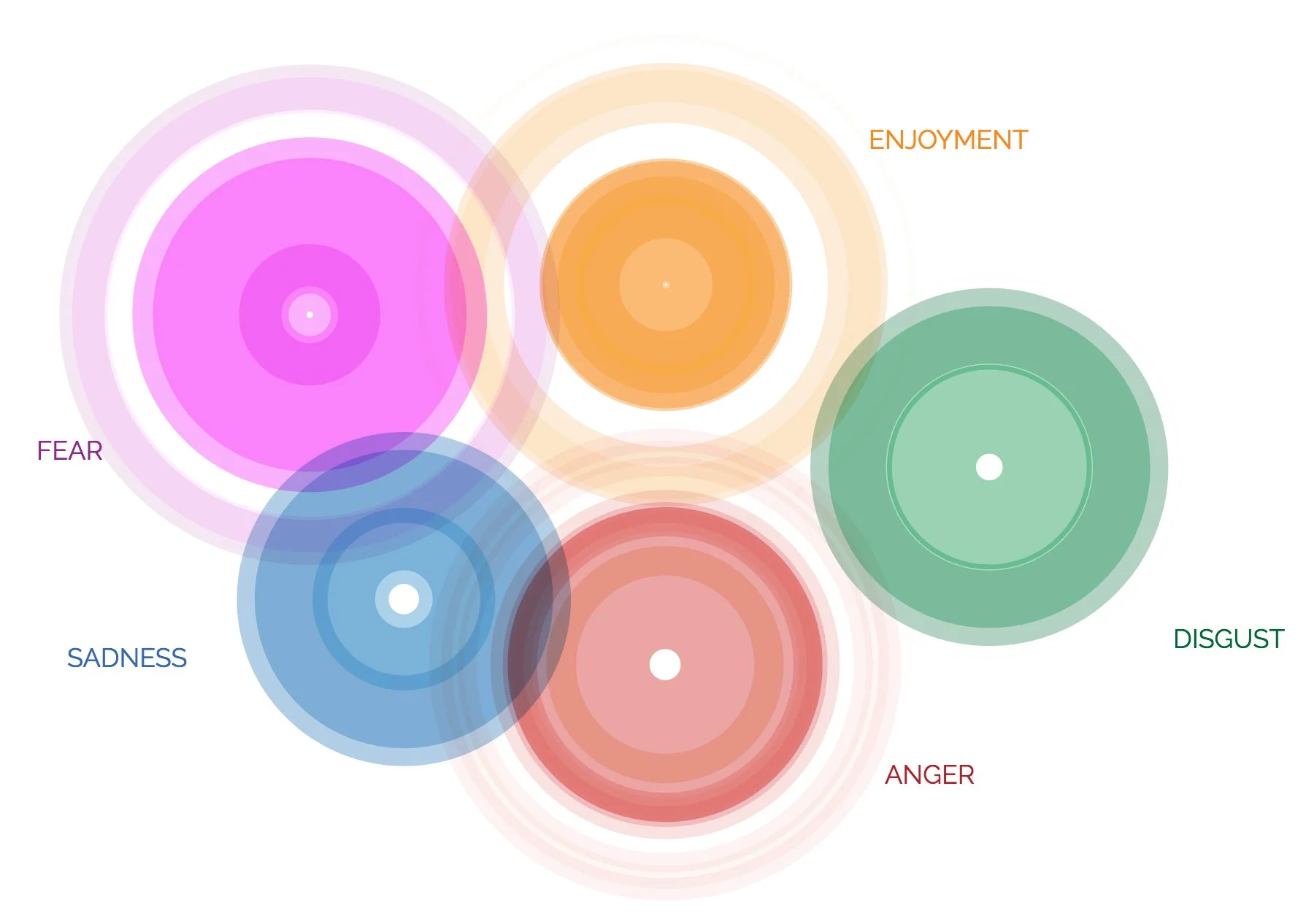
One idea is to categorise using 5 core emotions: anger, fear, sadness, disgust and enjoyment. Other emotions would be classified under these categories, and referred to as secondary emotions.
This website from Atlas of Emotions invites you to assess these 5 core emotions through an interactive journey.
Does everyone experience emotions in the same way?
While scientists have attempted to categorise emotions, the way we identify and interpret our emotions, and then share these experiences, is unique to us. The language of 'core emotions' is very useful to some people, but sometimes we might not have the words we need to name our emotions, or the words we have don't quiet match what we are experiencing.
It is important to consider other ways of communicating our inner experiences. Some people may find it easier to identify their emotions as colours, shapes, or energy, rather than using pre-defined language.
Noticing the unique way that your physical body reacts can help you to identify, and maybe name, your emotions more clearly. For example, when we are feeling scared, our body creates a chemical called adrenaline. This unconscious response prepares our body for fight or flight. We might notice this physical change by feeling cold, shivering or sweating, or even shaking.
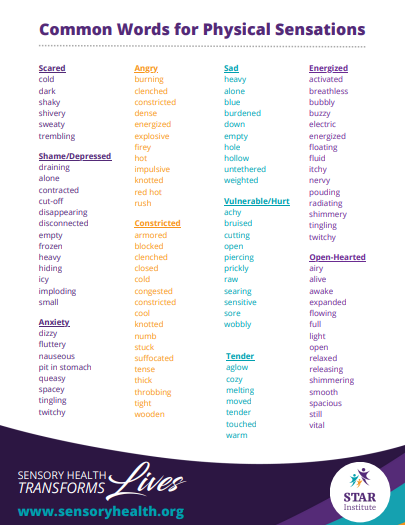
This resource from STAR Institute provides some ideas on the physical changes you might notice when experiencing different emotions.
Maybe using energy words feels best for you? Autism Level Up’s energy meter can be a useful way of bringing awareness to your body, and to your needs.
Side quest!
Alexithymia is a term used to describe difficulties in identifying and naming emotions, and it is something that many neurodivergent people experience.
Kelly Mahler explores the experience of alexithymia and offers some tips for connecting with your body in order to better understand your feelings.