My Body.
What is my body made of?
Don't you think that our bodies are amazing?! They contain highly complex systems, with many different parts working together to perform the various bodily functions. There are parts of the body which function automatically, and others that we can influence, and this enables us to interact with our environment - to be ALIVE!
If I asked you to think of parts of the body, you might list parts you can see such as your head, arms, or legs. Perhaps you might name some internal parts, like the lungs or the stomach. If we truly want to understand how our body functions, we need to look even more closely - at our cells. These are the smallest part of our bodies which is considered to be alive. They form the building blocks for all life, joining together to perform different roles, and enabling your body to function.
As humans, we share a biological history with all of the living creatures (organisms) within the Animal Kingdom. While animals may look and act very differently to one another, on a cellular level we all contain the same basic animal cell structures. Organisms within different Kingdoms will have cell structures unique to their own part of the evolutionary tree.
IMAGE SPACEHOLDER
It can be difficult to truly grasp the size and scale of small objects. This interactive diagram from the Genetic Learning Science Centre may help you to visualise just how small our body cells are.
The diagram below shows of a typical animal cell - just like the ones you would find within your body. Each cell is made up of small parts called cell organelles, which have a specific role within the cell. Some help the cell to make energy, others keep the cell clean.
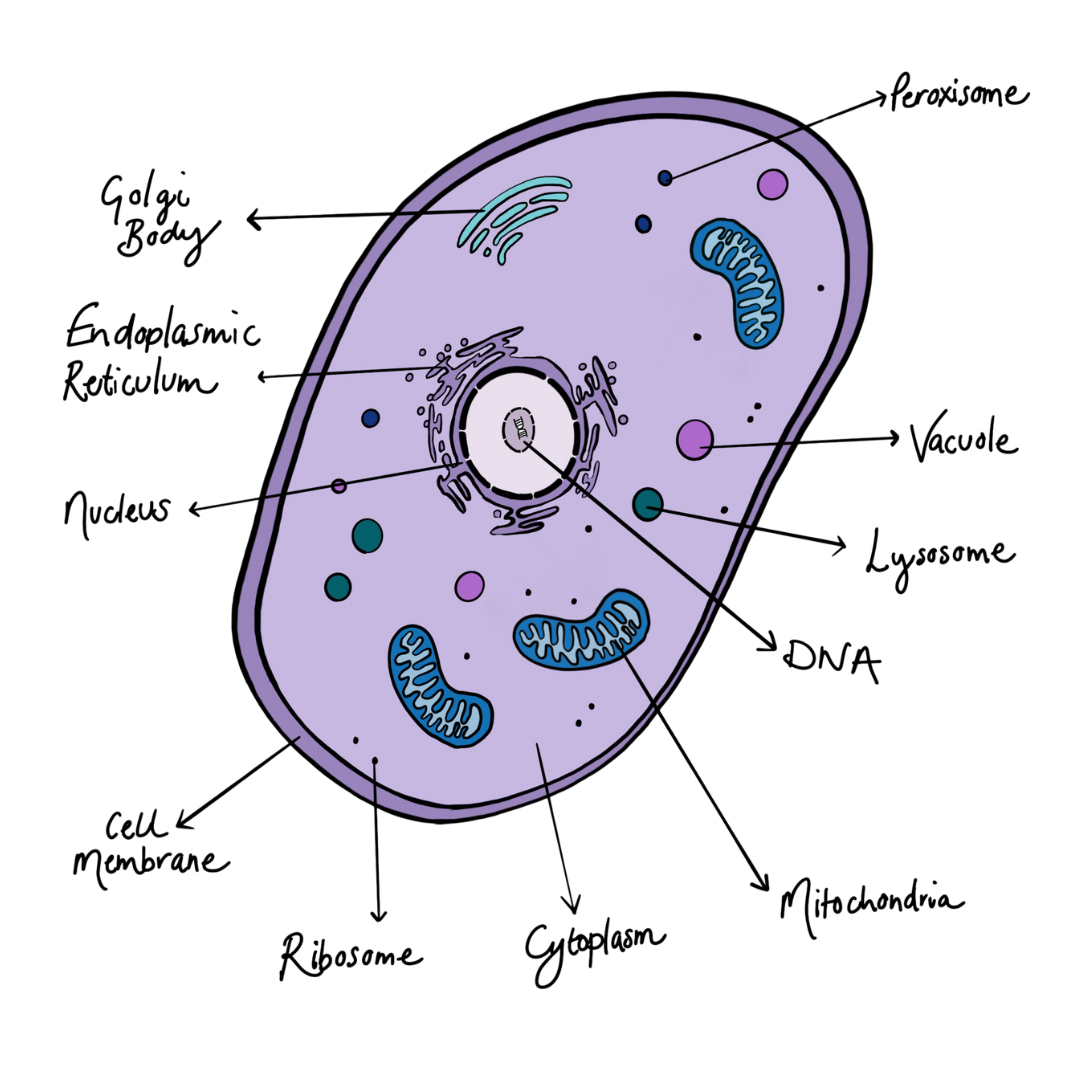
If you want to find out more, click the names in the list below!
-
A thin organelle which holds the cell together, while controlling which substances move into and out of the cell. It is partially permeable - which means that some chemicals are able to enter the cell freely, while others have to take other transport routes.
-
This jelly-like substance (made of water and dissolved solutes) is the site of many chemical reactions. It provides support for other cell structures.
-
There are two types of Endoplasmic Reticulum (ER) - Smooth and Rough. The Smooth ER is responsible for creating lipids (a type of fat) as well as detoxification of substances in the cell (such as drugs or chemicals). The Rough ER is responsible for creating proteins.
-
This organelle is responsible for modifying and sorting proteins, which is collects and seals into small droplets called vesicles. These vesicles are then transported to where they are needed, both inside and outside of the cell.
-
The nucleus contains the genetic material (DNA - Deoxyribose Nucleic Acid) which controls the activities for the cell.
-
A small organelle which is responsible for digesting unwanted materials in the cell.
-
A very important organelle, mitochondria is where most of the reactions occur to enable aerobic respiration. This process is what provides your body with energy to fuel all cellular processes. Some cells have more mitochondria than others, which means that they have a higher metabolism (the rate at which chemical reactions happens is faster).
-
These organelles play a crucial role in various metabolic pathways. Using enzymes (chemicals which speed up reactions) they help to break down long chain fatty acids and amino acids. They also help to detoxify the cell, breaking down harmful substances.
-
These small structures are found in the cytoplasm and are responsible for making proteins.
-
Animal cells contain temporary vacuoles. These are closed spaces, a little like a bubble, which contain molecules such as enzymes, waste products, and small molecules. Their specific role varies depending on the type of cell they are found in.
If you'd like to dive deeper into cell structure, and explore some of the other organelles you might find in human body cells , check out this game and quiz from Sheppard Software.
Side quest!
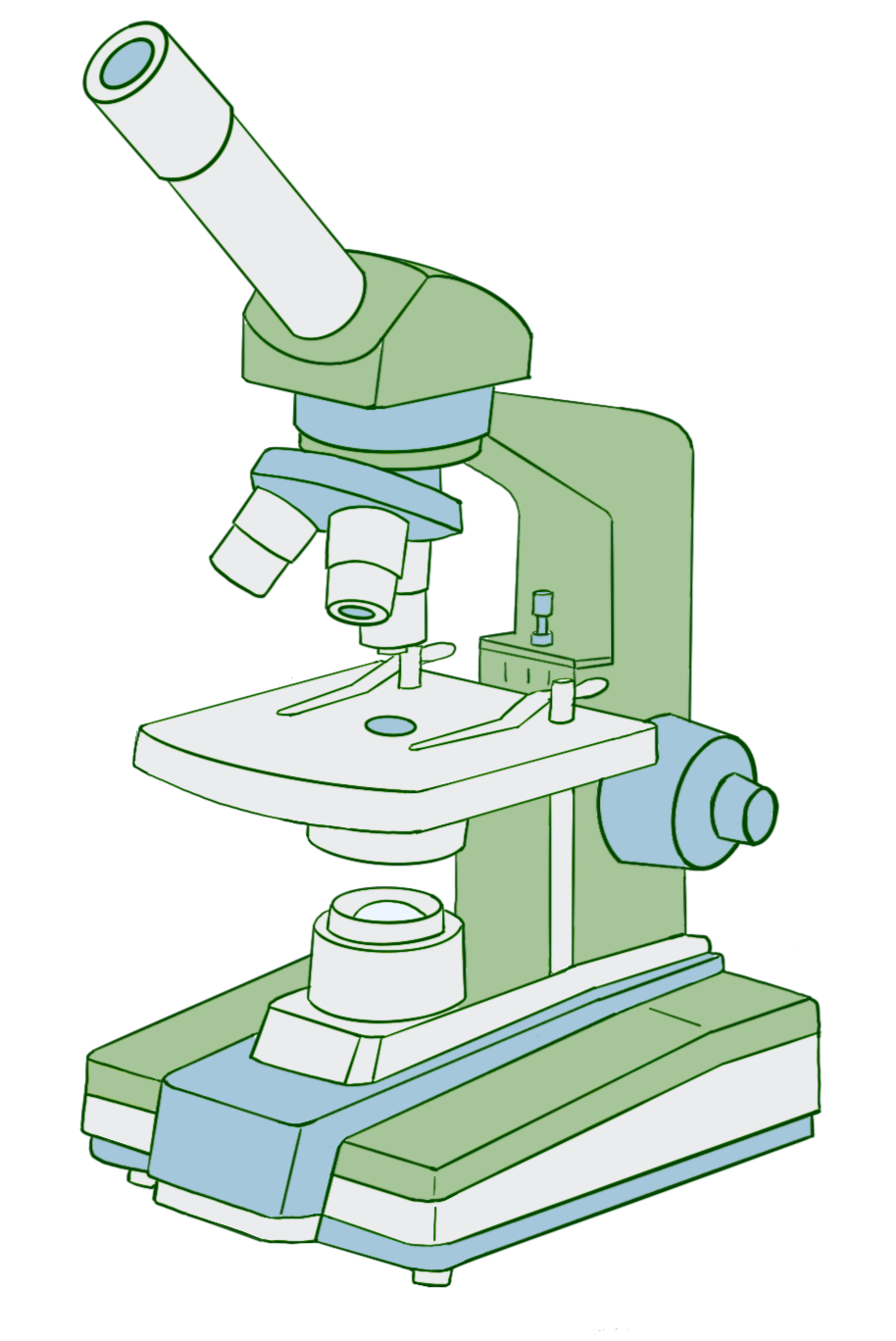
Did you know that the first microscope wasn’t made until 1665? And that it before we understood what a cell truly looked like, scientists believed that some cells contained a teeny-tiny humanlike being?
Yes, really!
Take this side quest to explore the weird and wonderful invention that is the microscope.
Looking at still images of cells, you might think that not a lot happens in a cell, or that they are relatively inactive. This isn't true!
At any given moment there are cells which are moving around your body, chemical reactions taking, and even cells which are interacting with each other.
This video from Seeker explores how breakthroughs in microscope technology has enabled a deeper understanding of our cells, and shares some of the impacts this understanding could have moving into the future.
Feeling creative?
If you enjoy making things, you might want to craft your own animal cell model using this tutorial.
Want to dive deeper?
The video below looks at the structure and function of animal cells in more depth. If you’re wanting to know what each of the organelles does, and how this affects our metabolism, this is for you.